
Welcome to ctd.qmat
ctd.qmat, the Cluster of Excellence for Complexity, Topology and Dynamics in Quantum Matter at Julius-Maximilians-Universität (JMU) Würzburg and Technische Universität (TU) Dresden, brings together around 300 scientists from more than 30 countries to develop tailored quantum materials with extraordinary properties.
We harness topological effects and explore the dynamics of quantum processes. Working at the intersection of physics, chemistry, and materials science, we are laying the foundation for tomorrow’s technologies — from efficient electronics to robust quantum systems.
The cluster unites two of the leading research hubs in condensed matter physics, and entered its second funding period under the German Excellence Strategy of the Federal and State Governments in 2026.
300
researchers
33
nationalities
14
years funding period
2019–25 & 2026–32
1,700
publications since 2019
Research
The Cluster of Excellence ctd.qmat develops tailored topological quantum materials and explores their potential for real-world applications. Focusing on the dynamics of quantum processes, ctd.qmat is laying the foundations for tomorrow’s high tech and pioneering new material concepts that go far beyond the silicon age, ushering in an entirely new era of innovation.
ctd.qmat brings together the world-class research of two leading universities – Julius-Maximilians-Universität (JMU) Würzburg and Technische Universität (TU) Dresden – and connects with outstanding partner institutions worldwide. Leading scientists from condensed-matter physics, photonics, chemistry, materials science, and nanoscience work together to translate fundamental research into revolutionary applications.
Beyond research, ctd.qmat nurtures scientific talent, strengthens public understanding of quantum technologies, and inspires the next generation of researchers.
Research Areas
Our latest Publications
-
S. Naduvile Thadathil et al.
Phys. Rev. Mater. 10, 104408 (2026)
arXiv:2603.25820Multicarrier electrical and thermal magnetotransport in altermagnetic CrSb
-
S. Naduvile Thadathil et al.
Phys. Rev. Mater. 10, 104408 (2026)
Multicarrier electrical and thermal magnetotransport in altermagnetic CrSb
-
S. Kumbhakar et al.
Nano Lett., (2026)
arXiv:2603.03980Dynamics of charge-density-wave puddles in 2H-NbSe$_\mathbf{2}$
-
N. Francini et al.
Phys. Rev. X 16, 031070 (2026)
arXiv:2510.23704Exact nematic and mixed magnetic phases driven by competing orders on the pyrochlore lattice
-
Y. Lee et al.
Mater. Today Phys. 67, 102185– (2026)
arXiv: 2501.12590Tuning the topological winding number by rolling up graphene
-
Y. Saleem et al.
Phys. Rev. B 114, 185114 (2026)
arXiv: 2604.19929Topological edge states emerging from twisted moiré bands
-
X. Huang et al.
Nat. Commun. 17, 9741 (2026)
arXiv: 2508.07351Experimental realization of the topologically nontrivial phase in monolayer Si$_\mathbf{2}$Te$_\mathbf{2}$
-
K. T. K. Chung et al.
Phys. Rev. X 16, 031065 (2026)
arXiv: 2506.19908Geometrically frustrated quadrupoles on the pyrochlore lattice and generalized spin liquids
-
A. Reingruber et al.
Phys. Rev. B 114, 165114 (2026)
Plasmon excitations in half-filled graphene: A comparative study between quantum Monte Carlo and random phase approximation
Careers & Support
ctd.qmat advances the frontiers of theoretical and experimental research on topological quantum materials. Interdisciplinary teams work in state-of-the-art facilities at two leading research universities – Julius-Maximilians-Universität Würzburg and Technische Universität Dresden – creating a vibrant environment for discovery and collaboration.
Outreach

-
![Fototobiasritz-06649-1920x1080]()
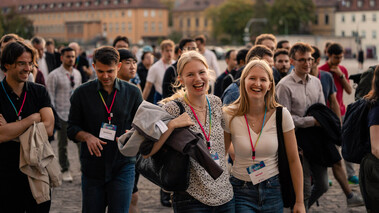
CTD.QMAT26: Würzburg Welcomes Leading Quantum Researchers from Around the World
-
![Laborverbundneubau-Ifw-Und-Tud-Visualisierung-Awb-Architekten-Dresden]()
Topping Out of Joint Research Building in Dresden
-
![Pressebild-Helmholtz-Preis2026-Kajetanfijalkowski-Fotoptb-1920x1080ctdqmat-De]()
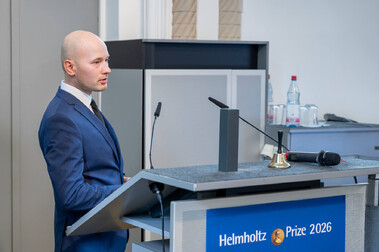
Record Precision in Electrical Resistance: Kajetan Fijalkowski Receives Helmholtz Prize
-
![Maser-Bild-5000x2813]()
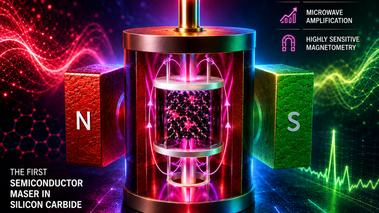
World’s First Semiconductor Maser
-
![Pressebild-Elektronikdielernt-Abbildungjochenthamm-1920x1080]()
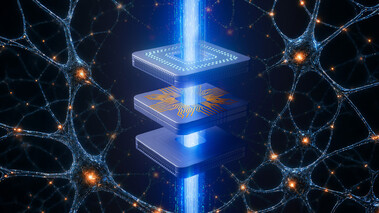
Electronics That Learn: Würzburg Team Builds Brain-Inspired Components
-
![Laetitiafarinacci-Fototobiasritz-Webslider]()
Lego with Atoms: Laëtitia Farinacci Takes Up New Edna Carter Professorship in Würzburg
-
![Sebastianklembt-Fototobiasritz-08851-16zu9]()
How Light Finds New Paths: Sebastian Klembt Takes Up the Chair of Experimental Physics I in Würzburg
-
![Pressebild-Newtonreloaded-Abbildungkilianneddermeyer-1920x1080]()
Newton Reloaded: Dresden Physicists Go Beyond the Action–Reaction Principle
-
![Ghn-Gruppe-Fototobiasritz-1920x1080]()
Kick-off for the Grete Hermann Career Forge program: Early-career women researchers take charge of their futures