
Welcome to ctd.qmat
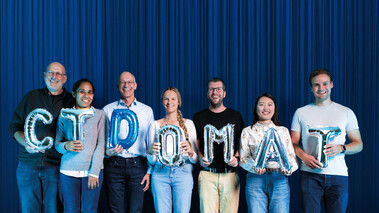
ctd.qmat, the Cluster of Excellence for Complexity, Topology and Dynamics in Quantum Matter at Julius-Maximilians-Universität (JMU) Würzburg and Technische Universität (TU) Dresden, brings together around 300 scientists from more than 30 countries to develop tailored quantum materials with extraordinary properties.
We harness topological effects and explore the dynamics of quantum processes. Working at the intersection of physics, chemistry, and materials science, we are laying the foundation for tomorrow’s technologies — from efficient electronics to robust quantum systems.
The cluster unites two of the leading research hubs in condensed matter physics, and entered its second funding period under the German Excellence Strategy of the Federal and State Governments in 2026.
300
researchers
33
nationalities
14
years funding period
2019–25 & 2026–32
1,700
publications since 2019
Research
The Cluster of Excellence ctd.qmat develops tailored topological quantum materials and explores their potential for real-world applications. Focusing on the dynamics of quantum processes, ctd.qmat is laying the foundations for tomorrow’s high tech and pioneering new material concepts that go far beyond the silicon age, ushering in an entirely new era of innovation.
ctd.qmat brings together the world-class research of two leading universities – Julius-Maximilians-Universität (JMU) Würzburg and Technische Universität (TU) Dresden – and connects with outstanding partner institutions worldwide. Leading scientists from condensed-matter physics, photonics, chemistry, materials science, and nanoscience work together to translate fundamental research into revolutionary applications.
Beyond research, ctd.qmat nurtures scientific talent, strengthens public understanding of quantum technologies, and inspires the next generation of researchers.
Research Areas
Our latest Publications
-
K. Baumgärtner et al.
Nat. Commun. 17, 2110 (2026)
arXiv:2305.07773Femtosecond concerted rotation of molecules on a 2D material interface
-
P. Konrad et al.
Sci. Adv. 12, eaea0109– (2026)
arXiv:2503.22815Intermediate excited state relaxation dynamics of boron vacancy spin defects in hexagonal boron nitride
-
D. V. Semenok et al.
Adv. Sci. n/a, e20701 (2026)
arXiv:2412.11727Transmission of radio-frequency waves and nuclear magnetic resonance in Lanthanum superhydrides
-
J. S. Lim et al.
Adv. Funct. Mater. n/a, e00032 (2026)
arXiv:2507.22638Inducing ferromagnetism by structural engineering in a strongly spin-orbit coupled oxide
-
H. Kim et al.
Nature, (2026)
arXiv:2505.17200Resolving intervalley gaps and many-body resonances in moiré superconductors
-
G. A. Starkov and B. Trauzettel et al.
Phys. Rev. B 113, L041406 (2026)
arXiv:2502.04880Anomalous Knudsen effect signaling long-lived modes in two-dimensional electron gases
-
M. Hofer et al.
Phys. Rev. B 113, 045303 (2026)
Surface state dominated transport in HgTe topological insulator devices
-
P. d'Ornellas et al.
Phys. Rev. B 113, 024426 (2026)
arXiv:2504.08597Altermagnetism without crystal symmetry
Careers & Support
ctd.qmat advances the frontiers of theoretical and experimental research on topological quantum materials. Interdisciplinary teams work in state-of-the-art facilities at two leading research universities – Julius-Maximilians-Universität Würzburg and Technische Universität Dresden – creating a vibrant environment for discovery and collaboration.
Outreach
-
![Rethinking-Physics-At-Ifw-Dresden-Fotopatriciabaeuchlerifwdresden-1920x1080]()
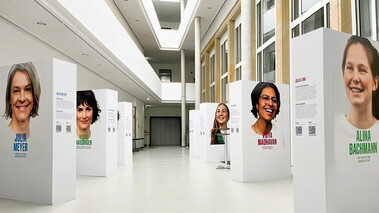
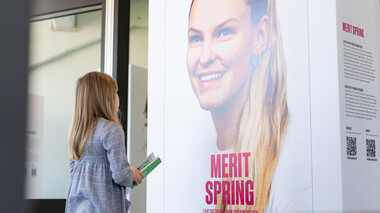
Women Quantum Physicists Take Center Stage: RETHINKING PHYSICS Concludes International Tour in Dresden
-
![Adobestock-1664546096-1920x1080]()
ctd.qmat Team Deciphers Moiré Superconductivity
-
![Pressebild-2026-02-Ctdqmat-Fototobiasritz-1920x1080]()
New Name, Expanded Focus: ctd.qmat Launches into the Future of Quantum Research
-
![2026-03-Ercgrant-Vaynzof-1920x1080]()
European Funding to Bring New Technology to Market
-
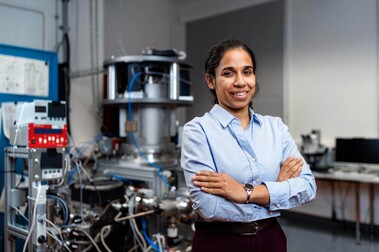
![Aparajita Singha standing with arms crossed in a lab, surrounded by technical equipment.]()
Measuring a Single Magnetic Moment New Quantum Chair Launched in Dresden
-
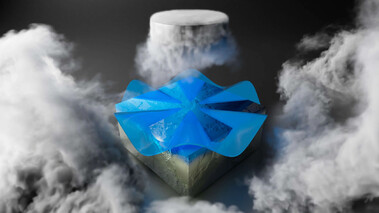
![Abstrakte Illustration eines kristallartigen blauen Objekts in einer nebligen Umgebung, Symbolisierung von Quanten‑Materialforschung.]()
Surface-Only Superconductor Is the Strangest of Its Kind
-
![Porträt eines Forschers in Sakko vor Holzpaneelen — Mitglied des ct.qmat‑Clusters.]()
Roderich Moessner to Receive Max Born Prize
-
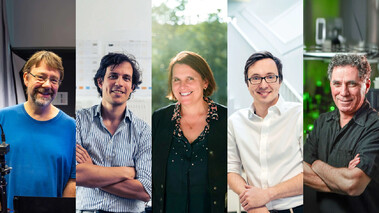
![Fünf Wissenschaftlerinnen und Wissenschaftler des ct.qmat‑Clusters stehen nebeneinander und blicken zur Kamera.]()
ct.qmat Celebrates Five Among World’s Most Cited Researchers
-
![Langzeitbelichtung einer Autobahn bei Nacht mit bunten Lichtspuren.]()
New Structure for the Electron Highway